

Hey there, fellow camping enthusiasts! As a supplier of camping fridges, I often get asked about the energy efficiency of the camping fridges we sell. It's a crucial topic, especially when you're out in the wild, relying on limited power sources like batteries or solar panels. So, let's dive right in and explore what energy efficiency really means for your camping fridge.
First off, what do we mean by energy efficiency? In simple terms, it's how well a fridge can keep your food and drinks cold while using as little energy as possible. A more energy - efficient fridge will run longer on a single charge, saving you the hassle of constantly recharging or swapping out batteries. This is super important when you're off - the - grid for days or weeks at a time.
There are a few key factors that affect the energy efficiency of a camping fridge. One of the most important is the type of cooling technology it uses. Most camping fridges on the market today use either compressor - based cooling or thermoelectric cooling.
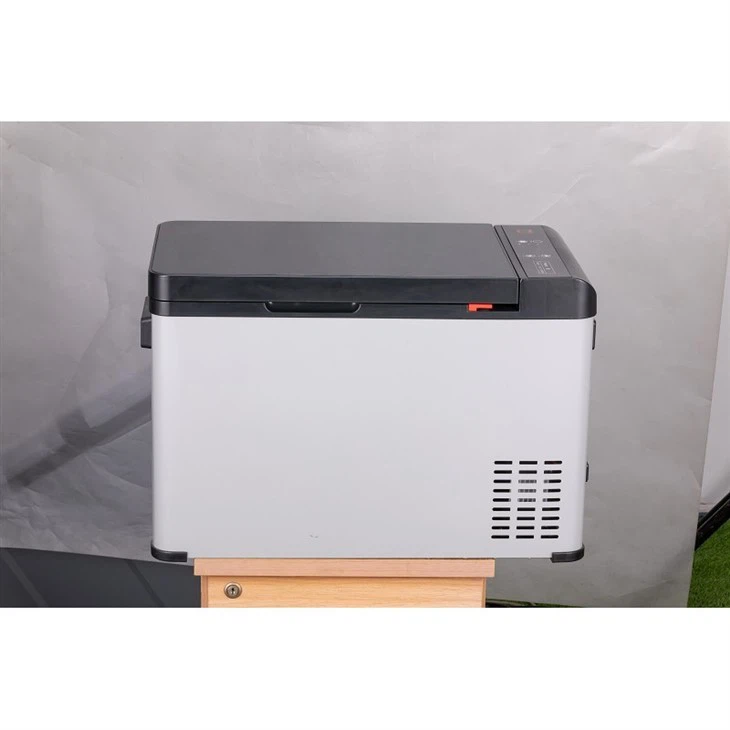
Compressor - based fridges are generally more energy - efficient, especially when it comes to maintaining low temperatures. They work in a similar way to your home refrigerator, using a compressor to circulate refrigerant and remove heat from the inside of the fridge. These fridges can cool down quickly and can reach lower temperatures compared to thermoelectric fridges. For example, our DC 28 Liter Refrigerator For RV uses a high - quality compressor, which not only provides excellent cooling performance but also uses energy smartly.
On the other hand, thermoelectric fridges are less energy - efficient but have their own advantages. They are simpler in design, lighter, and often more affordable. They work by using the Peltier effect to transfer heat from one side of a module to the other. However, they usually can't cool down as much as compressor - based fridges, and their efficiency drops significantly as the outside temperature rises.
Another factor that impacts energy efficiency is the size of the fridge. Logically, a larger fridge will need more energy to keep everything cold. But it's not just about the gross volume. The insulation of the fridge also plays a huge role. A well - insulated fridge will retain cold air better, reducing the amount of energy needed to maintain the desired temperature. Our 35L/45L/55L Portable Refrigerator range is designed with top - notch insulation materials, which helps to keep energy consumption in check even with larger volumes.
The temperature settings you choose also have a big impact on energy use. The lower you set the temperature, the more energy the fridge will consume. So, it's a good idea to set the temperature just cold enough to keep your food fresh. If you're mainly storing drinks and don't need super - cold temperatures, you can set it a bit higher to save energy.

Now, let's talk about how to measure the energy efficiency of a camping fridge. One common way is to look at the power consumption in watts. This tells you how much energy the fridge uses per hour. But just looking at the wattage isn't enough. You also need to consider the duty cycle, which is the percentage of time the fridge's compressor or cooling system is running. A fridge with a lower duty cycle will use less energy over a given period.
Some fridges also come with additional features that can help improve energy efficiency. For example, some have an energy - saving mode, which adjusts the cooling settings to use less power. Others have smart sensors that can detect when the door has been opened and adjust the cooling accordingly.
It's also worth noting that the environment in which you use the fridge can affect its energy efficiency. If it's really hot outside, the fridge will have to work harder to maintain the inside temperature, using more energy. So, try to keep your fridge in the shade and away from direct sunlight when camping.
If you're using a battery to power your fridge, you need to make sure your battery capacity is sufficient. The energy consumption of the fridge will determine how long your battery will last. You can calculate the total energy consumption of the fridge in amp - hours (Ah) and match it with a battery that has enough capacity. For longer camping trips, you might consider investing in a solar panel to recharge your batteries, which is an eco - friendly and cost - effective way to keep your fridge running.
In addition to fridges, we also offer a Portable Car Heater for those colder camping nights. Just like with fridges, energy efficiency is an important factor to consider when choosing a heater. You want to keep warm without draining your battery too quickly.
As a camping fridge supplier, we're committed to providing products that are not only high - quality but also energy - efficient. We understand that our customers need reliable products that won't let them down in the great outdoors. Whether you're a weekend camper or a long - term adventurer, having an energy - efficient fridge can make your camping experience much more enjoyable.
If you're in the market for a new camping fridge or heater, we'd love to hear from you. We're here to assist you in choosing the right product based on your needs and budget. Whether you have questions about energy efficiency, product features, or anything else, our team of experts is ready to help. Contact us for a friendly chat about your camping equipment requirements, and let's find the perfect solution for your next outdoor adventure!
References
- Various industry reports on camping fridge technology and energy efficiency
- Manufacturer specifications of the camping fridges and heaters we offer


